
Rebecca Thompson
Senior Grants Manager
Berru Charitable Foundation
Published: October 8, 2024
Rebecca Thompson brings over a decade of dedicated experience in philanthropic grantmaking, with a specialized focus on religious and community-based initiatives that strengthen the fabric of our society. As Senior Grants Manager at Berru Charitable Foundation, she oversees a $25 million annual grant portfolio that supports transformative projects across faith communities and interfaith organizations nationwide.
With her Master's degree in Nonprofit Management from New York University and extensive field experience, Rebecca has developed a nuanced understanding of how faith-based organizations can serve as powerful catalysts for community development, education, and social cohesion. Her approach combines rigorous impact assessment with deep respect for the unique missions and values of religious institutions.
Rebecca's work at Berru Charitable Foundation reflects her belief that strategic philanthropy can amplify the inherent strengths of faith communities while fostering collaboration across denominational and cultural boundaries. Her portfolio includes groundbreaking interfaith initiatives, innovative religious education programs, and community outreach projects that have touched thousands of lives.
Professional Background and Expertise
Rebecca's journey in philanthropic work began more than ten years ago, driven by a passion for supporting organizations that serve as pillars of hope and transformation in their communities. After earning her Master's degree in Nonprofit Management from New York University in 2013, she immediately immersed herself in the grantmaking sector, recognizing the profound impact that strategic funding could have on community-based initiatives.
Her academic training provided a solid foundation in nonprofit governance, financial management, and program evaluation, but it was her hands-on experience working with diverse faith communities that truly shaped her approach to grantmaking. Rebecca spent her early career years conducting site visits, meeting with religious leaders, and observing firsthand how faith-based organizations navigate the complex intersection of spiritual mission and community service.

Throughout her career, Rebecca has developed particular expertise in evaluating faith-based organizations and interfaith community projects. She understands that assessing the impact of religious initiatives requires sensitivity to both quantitative outcomes and qualitative spiritual and community benefits. Her evaluation frameworks honor the distinctive nature of faith-based work while maintaining the rigorous standards necessary for responsible stewardship of philanthropic resources.
Rebecca's expertise extends across multiple dimensions of religious and community-based philanthropy. She has deep knowledge of denominational structures and governance models, understanding how different faith traditions organize their charitable work. She is well-versed in the regulatory landscape affecting religious nonprofits, including tax-exempt status considerations and compliance requirements. Most importantly, she has cultivated relationships with religious leaders and community organizers across the country, building a network of trust that enables meaningful collaboration and knowledge sharing.
Managing a $25 Million Grant Portfolio
As Senior Grants Manager at Berru Charitable Foundation, Rebecca oversees one of the most substantial portfolios dedicated to religious and community-based initiatives in the philanthropic sector. The $25 million annual grant portfolio she manages represents not just financial resources, but the hopes and aspirations of countless communities seeking to strengthen their capacity for service and spiritual growth.
Rebecca's role encompasses the entire grantmaking lifecycle, from initial application review through post-grant evaluation. She leads a dedicated team that processes hundreds of grant applications annually, each representing a unique vision for community transformation. Her leadership style emphasizes collaborative decision-making, ensuring that diverse perspectives inform funding choices while maintaining consistency with the foundation's mission and values.
Grant Application Review
Rebecca has developed a comprehensive evaluation framework that assesses organizational capacity, program design, community need, and potential for sustainable impact. She personally reviews high-priority applications and provides guidance to her team on complex cases.
Portfolio Management
She maintains active relationships with all grantee organizations, conducting site visits, facilitating peer learning opportunities, and providing technical assistance when needed. This hands-on approach ensures that funded projects receive support beyond financial resources.

The portfolio Rebecca manages is strategically diversified across multiple focus areas within religious and community-based work. Approximately 40% of funding supports religious education initiatives, including seminary programs, youth faith formation, and adult spiritual development. Another 35% goes to interfaith community projects that build bridges across religious traditions and promote mutual understanding. The remaining 25% supports community outreach programs operated by faith-based organizations, including food security initiatives, housing assistance, and social services.
Rebecca's portfolio management philosophy emphasizes both accountability and flexibility. She has implemented robust reporting requirements that capture meaningful data about program outcomes and community impact, while remaining sensitive to the resource constraints many faith-based organizations face. She works closely with grantees to develop realistic evaluation plans that generate useful information without creating excessive administrative burden.
Under Rebecca's leadership, the foundation has also pioneered innovative funding approaches, including multi-year grants that provide stability for long-term initiatives, capacity-building grants that strengthen organizational infrastructure, and collaborative grants that encourage partnerships between organizations. These flexible funding mechanisms reflect her understanding that sustainable community change requires patient capital and adaptive support.
Approach to Impact Assessment
Rebecca has developed a distinctive approach to impact assessment that honors the unique nature of faith-based work while maintaining rigorous evaluation standards. She recognizes that measuring the impact of religious and spiritual initiatives requires frameworks that can capture both tangible community outcomes and less quantifiable but equally important dimensions of human flourishing.
Her evaluation methodology incorporates multiple data sources and perspectives. Quantitative metrics track participation numbers, service delivery statistics, and demographic reach. Qualitative methods, including interviews, focus groups, and narrative reports, capture stories of personal transformation, community strengthening, and spiritual growth. Rebecca believes that both types of data are essential for understanding the full impact of faith-based initiatives.
Key Evaluation Principles
- Contextual Understanding: Rebecca insists on understanding each organization's unique context, including its theological tradition, community demographics, and local challenges. She recognizes that effective evaluation must be culturally and religiously sensitive.
- Participatory Evaluation: She involves grantee organizations in designing evaluation frameworks, ensuring that assessment methods align with their values and capacity. This collaborative approach builds evaluation literacy and ownership.
- Learning Orientation: Rather than viewing evaluation solely as accountability, Rebecca emphasizes its role in organizational learning and continuous improvement. She helps grantees use evaluation data to refine their programs and strengthen their impact.
- Long-term Perspective: She recognizes that meaningful community and spiritual transformation often unfolds over years, not months. Her evaluation frameworks include provisions for tracking long-term outcomes and sustained impact.

Rebecca has also been instrumental in developing sector-wide best practices for evaluating interfaith initiatives. She has published articles and presented at conferences on the challenges and opportunities of assessing programs that bring together diverse religious communities. Her work has helped establish standards that balance respect for religious particularity with the need for common metrics that enable comparison and learning across projects.
One of Rebecca's most significant contributions has been her development of a "Theory of Change" framework specifically adapted for faith-based organizations. This framework helps organizations articulate how their religious values and spiritual practices connect to concrete community outcomes. By making these connections explicit, organizations can better communicate their impact to diverse stakeholders while remaining true to their faith-based identity.
Success Stories from Funded Programs
Throughout her tenure at Berru Charitable Foundation, Rebecca has had the privilege of supporting numerous transformative initiatives that demonstrate the power of faith-based community work. These success stories reflect not only the dedication of grantee organizations but also Rebecca's skill in identifying promising projects and providing the support they need to flourish.
Interfaith Youth Leadership Academy
One of Rebecca's most celebrated funded projects is the Interfaith Youth Leadership Academy, a program that brings together high school students from Christian, Jewish, Muslim, Hindu, and Buddhist communities for intensive leadership training and service learning. When Rebecca first reviewed the application in 2019, she recognized the program's potential to address both religious literacy gaps and youth civic engagement.
The foundation provided a three-year, $750,000 grant that enabled the program to expand from serving 30 students annually to reaching 150 students across five cities. Rebecca worked closely with program leaders to develop an evaluation framework that tracked not only participation metrics but also changes in students' religious literacy, interfaith attitudes, and civic engagement behaviors.
The results have been remarkable. Follow-up surveys show that 92% of program alumni report increased understanding of religious traditions different from their own, 85% have maintained friendships across religious lines, and 78% have engaged in community service or advocacy work. Several alumni have gone on to pursue careers in interfaith relations, nonprofit leadership, and community organizing. Rebecca considers this program a model for how strategic funding can catalyze lasting change in young people's lives and communities.

Rural Faith Communities Food Security Initiative
Another success story that exemplifies Rebecca's strategic vision is the Rural Faith Communities Food Security Initiative, a collaborative project involving churches, synagogues, and mosques in underserved rural areas. Rebecca recognized that rural faith communities often have strong social capital and community trust but lack the financial resources and technical expertise to address persistent food insecurity.
The foundation's $1.2 million grant supported a network of 25 rural congregations in establishing community gardens, food pantries, and meal programs. Beyond financial support, Rebecca arranged for technical assistance from agricultural extension services and nonprofit food security experts. She also facilitated peer learning exchanges where rural faith leaders could share strategies and learn from each other's experiences.
The initiative has distributed over 500,000 pounds of fresh produce and provided more than 75,000 meals to food-insecure families. Perhaps more importantly, it has strengthened the capacity of rural faith communities to serve as hubs of community resilience. Several participating congregations have expanded their programs to include nutrition education, cooking classes, and community health initiatives. Rebecca's holistic approach to grantmaking—combining financial resources, technical assistance, and network building—has been key to the initiative's success.
Seminary Innovation and Leadership Program
Rebecca has also championed investments in religious education at the seminary level, recognizing that preparing future religious leaders is essential for the long-term vitality of faith communities. The Seminary Innovation and Leadership Program, which she helped design and launch, provides grants to theological schools for curriculum innovation, leadership development, and community engagement initiatives.
The program has supported 15 seminaries across multiple denominations in developing new courses on community organizing, nonprofit management, interfaith relations, and social entrepreneurship. Rebecca worked with seminary leaders to ensure that these innovations were grounded in theological reflection while equipping students with practical skills for 21st-century religious leadership.
Early outcomes are promising. Participating seminaries report increased student engagement, stronger connections with local communities, and graduates who feel better prepared for the multifaceted demands of religious leadership. Several schools have institutionalized the innovations, incorporating them into core curriculum requirements. Rebecca's investment in religious education reflects her understanding that strengthening faith communities requires attention to leadership development and institutional capacity.

These success stories represent just a fraction of the impact Rebecca has facilitated through her work at Berru Charitable Foundation. Each funded project reflects her commitment to supporting faith communities as they serve their neighbors, build bridges across differences, and contribute to the common good. Her ability to identify promising initiatives, provide strategic support, and document meaningful outcomes has made her an invaluable asset to both the foundation and the broader field of religious philanthropy.
Vision and Philanthropic Philosophy
Rebecca's approach to grantmaking is grounded in a clear philosophical vision about the role of faith communities in society and the potential of strategic philanthropy to amplify their positive impact. She believes that religious institutions, at their best, serve as anchors of community life—providing not only spiritual nourishment but also social services, civic engagement opportunities, and spaces for building relationships across lines of difference.
Central to Rebecca's philosophy is the conviction that effective philanthropy requires genuine partnership between funders and grantees. She rejects the traditional power dynamics that can characterize foundation-nonprofit relationships, instead cultivating relationships based on mutual respect, shared learning, and collaborative problem-solving. She regularly seeks input from grantee organizations about foundation policies and practices, recognizing that those closest to the work often have the best insights about what support is most needed.
"Faith communities have been serving their neighbors and building social capital for centuries. Our role as philanthropists is not to direct their work but to provide resources and support that enable them to pursue their missions more effectively. The best grantmaking is humble, patient, and deeply respectful of the wisdom and experience that religious leaders and communities bring to their work."
— Rebecca Thompson
Rebecca is particularly passionate about supporting interfaith initiatives, viewing them as essential for building the social cohesion and mutual understanding necessary for thriving pluralistic communities. She has observed that when people of different faiths work together on shared concerns—whether feeding the hungry, educating children, or advocating for justice—they develop relationships that transcend theological differences while respecting religious particularity.
Her vision for the future of religious philanthropy includes several key priorities. First, she advocates for increased funding for capacity building, recognizing that many faith-based organizations need support for infrastructure, technology, and staff development to maximize their impact. Second, she champions multi-year, flexible funding that gives organizations the stability and autonomy to pursue their missions without excessive reporting burdens. Third, she promotes collaborative funding approaches that bring together multiple funders to support large-scale initiatives that no single foundation could support alone.
Rebecca also believes that the philanthropic sector needs to do more to support emerging religious leaders and innovative faith-based initiatives. She has been a vocal advocate for funding that takes calculated risks on new approaches and younger leaders, arguing that the field needs to balance support for established institutions with investment in innovation and leadership development. Her own grantmaking reflects this commitment, with a significant portion of her portfolio dedicated to pilot projects and emerging organizations.
Contributions to the Field
Beyond her direct grantmaking work, Rebecca has made significant contributions to the broader field of religious philanthropy through writing, speaking, and professional leadership. She is a frequent presenter at conferences organized by the Council on Foundations, Grantmakers in Religion, and the Association of Theological Schools, where she shares insights from her work and engages with peers about emerging trends and challenges.
Rebecca has published articles in leading philanthropy journals on topics including evaluation of faith-based programs, interfaith grantmaking strategies, and the role of religious institutions in community development. Her writing is characterized by practical wisdom grounded in real-world experience, making her work valuable to both practitioners and scholars. She has also contributed chapters to several edited volumes on nonprofit management and religious leadership.
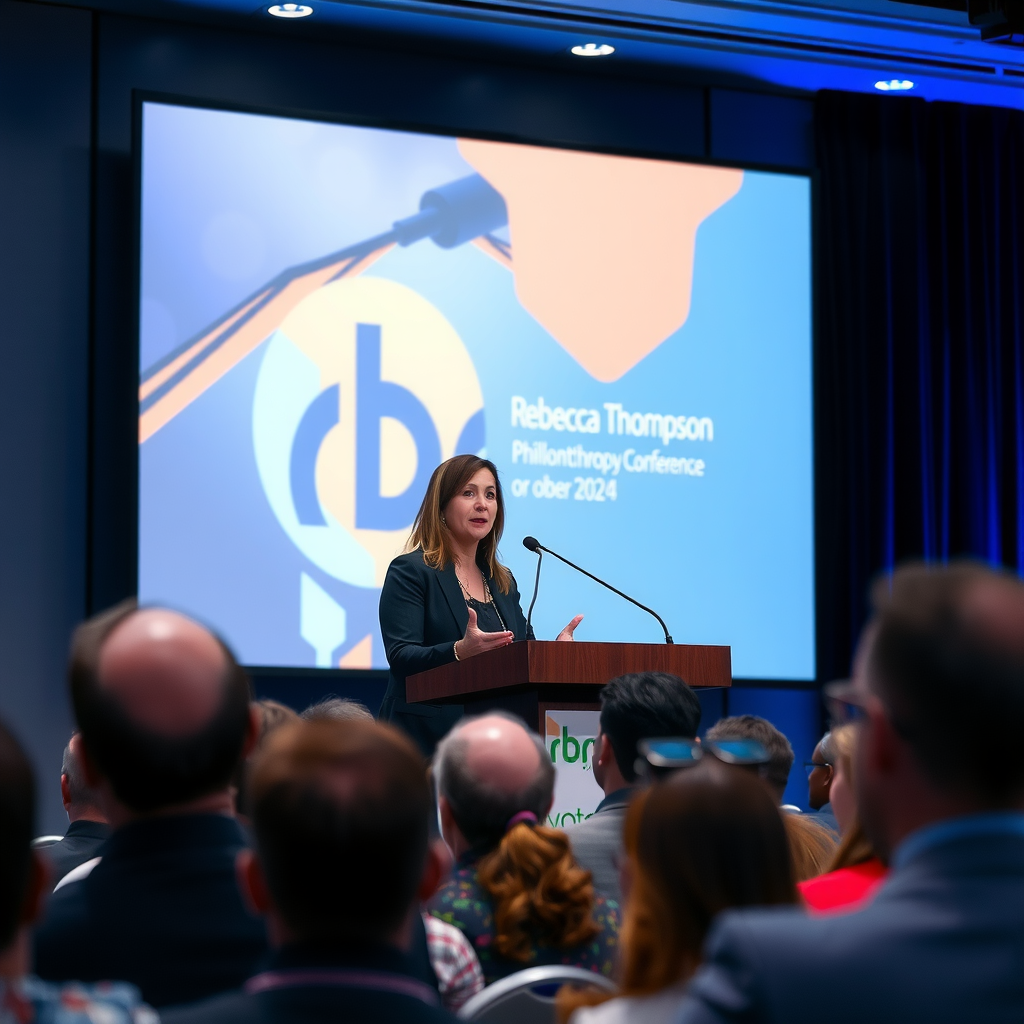
She serves on the board of directors for the National Association of Religious Grantmakers, where she chairs the Professional Development Committee. In this role, she has helped design training programs for emerging grantmakers and established mentorship initiatives that connect experienced professionals with those new to the field. Her commitment to building the capacity of the philanthropic workforce reflects her understanding that the quality of grantmaking depends on the skills and knowledge of individual practitioners.
Rebecca is also actively involved in several working groups focused on improving philanthropic practice. She participates in a national learning community on interfaith grantmaking, where funders share strategies and learn from each other's experiences. She has contributed to the development of best practice guidelines for evaluating faith-based programs and has helped create resources that make these guidelines accessible to smaller foundations and individual donors.
Her professional contributions extend to mentoring the next generation of philanthropic leaders. Rebecca regularly hosts graduate students and early-career professionals for informational interviews and job shadowing experiences. She has supervised several NYU Nonprofit Management program interns, providing them with hands-on experience in grantmaking and exposure to the complexities of religious philanthropy. Many of her former mentees now hold positions at foundations and nonprofit organizations across the country.
Looking Forward
As Rebecca looks to the future, she sees both challenges and opportunities for religious philanthropy. The landscape of American religious life is changing, with declining institutional affiliation among younger generations and increasing religious diversity. These trends require philanthropic strategies that can support both traditional religious institutions and emerging forms of faith-based community organizing.
Rebecca is particularly interested in exploring how technology can enhance the work of faith communities while preserving the essential human connections that make religious community meaningful. She has begun supporting initiatives that use digital tools for religious education, community organizing, and service coordination, while remaining attentive to the risks of technology replacing face-to-face relationships.
She is also committed to advancing equity and inclusion within religious philanthropy. This includes supporting faith communities led by and serving people of color, LGBTQ+ individuals, immigrants, and other marginalized groups. Rebecca recognizes that the philanthropic sector has historically underinvested in these communities and is working to shift resources toward organizations that center the voices and leadership of those most affected by social inequities.
Rebecca Thompson's decade-plus career in religious philanthropy exemplifies the profound impact that thoughtful, strategic grantmaking can have on communities and institutions. Through her management of Berru Charitable Foundation's $25 million grant portfolio, her innovative approaches to impact assessment, and her commitment to partnership and learning, she has helped strengthen faith communities across the country. Her work demonstrates that when philanthropy is practiced with humility, respect, and strategic vision, it can be a powerful force for positive change—amplifying the inherent strengths of religious institutions while fostering collaboration, innovation, and lasting community impact.